
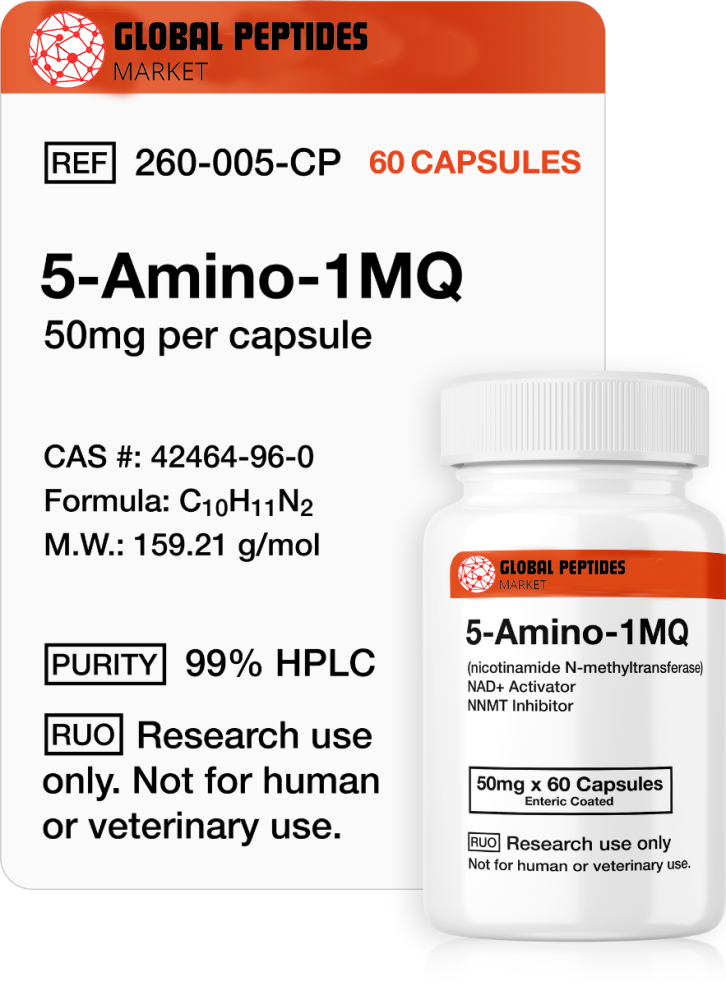
5-Amino-1MQ Overview
5-amino-1MQ (5-amino-1methylquinolinium) an analogue of methylquinolinium, is a short peptide inhibitor of cytosolic nicotinamide N-methyltransferase (NNMT). The NNMT enzyme has been linked to both obesity and type 2 diabetes and is known to play a role in energy homeostasis within the cell. Inhibiting NNMT leads to significant weight loss, decreased fat mass and fat cell (adipocyte) size, and lower plasma cholesterol and glucose levels. 5-amino-1MQ and other methylquinolinium derivatives are under active investigation as potential treatments for obesity and diabetes. It also appears that inhibition of NNMT can activate stem cells and improve regenerative capacity in skeletal muscle.
—————————

5-Amino-1MQ Structure
Molecular Formula: C10H11N2
Molecular Weight: 159.21 g/mol
PubChem CID: 950107
CAS Number: 42464-96-0
Synonyms: 5-amino-1-methylquinolinium
5-Amino-1MQ Research
Obesity
Nicotinamide N-methyltransferase is a cytosolic enzyme found in many cells throughout the body, but is most abundant in liver and fat cells. Research in mice shows that high levels of NNMT are associated with decreased levels of the sugar transporter GLUT4. GLUT4, which is primarily in striated muscle (skeletal and cardiac) and fat cells, is heavily linked to blood sugar levels and the development of diabetes. In rodent studies, mice that produce high levels of GLUT4 are insulin sensitive and relatively resistant to the development of type 2 diabetes while mice with low GLUT4 levels demonstrate profound insulin resistance.
In fact, GLUT4 has been linked to basal metabolic rate and the concepts of fast and slow metabolism. Individuals with naturally high levels of GLUT4 have “faster metabolism” than those with low levels of GLUT4 and burn more calories as a result. It is also true that production of the transporter is stimulated by exercise, explaining why exercise can help to combat weight loss, elevated blood sugar levels, and insulin resistance. As it turns out, GLUT4 and NNMT are closely linked to one another and to basal metabolism in mammals [1]. According to Dr. Barbara Kahn of Harvard Medical School, the connection between GLUT4 and NNMT is what first led to the investigation of the latter enzyme as a potential target in the treatment of diabetes and obesity. High levels of NNMT are often found in the fat cells of animals with insulin resistance. Manipulating this gene helps to counteract insulin resistance and thus diabetes. It also has a profound effect on weight and obesity.
Human metabolism, and indeed all animal metabolism is highly efficient, making the most use out of a limited number of calories. Unfortunately, this very efficiency may be the mechanism underlying our penchants for obesity in the setting of excess calorie intake. Reducing the efficiency of human metabolism, causing the body to essentially waste calories, has long been a holy grail of medicine as it works to combat the growing obesity epidemic. NNMT and its interactions with GLUT4 may be the link that scientists have been searching for. [2], [3].
In the most basic sense, NNMT slows how quickly the body utilizes calories thereby leaving them available for storage in fat or glycogen. Decreased NNMT levels decrease the conversion of nicotinic acid (NA) into 1-methylnicotinamide (1-MNA). This process has two effects on metabolism as follows.
Source: Science Direct
So the net result of administering an NNMT blocker like 5-amino-1MQ is an increase in energy burning and a decrease in energy storage. When this is coupled with the fact that decreased NNMT levels also increases GLUT4 transporter expression, you have a recipe for improve glucose clearance from the blood and then direct disposition of that glucose when it is burned. The results are decreased need for insulin, decreased insulin resistance, decreased fat production, and increased energy metabolism. Studies in mice over just 10 days of 5-amino-1MQ administration reveal a 7% reduction in rate and a 30% reduction in fat mass. In addition, blood cholesterol levels in treated mice are equal to those of non-obese mice. Remarkably, these changes occur without any alteration in food consumption [5]. Mice given 5-amino-1MQ show a 7% reduction in body mass over just 10 days, without any changes in food intake, compared to controls:
Source: Science Direct
More recent evidence suggests that the benefit of 5-amino-1MQ may extend beyond its ability to downregulate NNMT and thus increase inefficient metabolism and GLUT4 expression. Research in mice suggests that by boosting GLUT4 expression, 5-amino-1MQ may alter the way fat cells work, leading them to produce an alternative class of lipids that have anti-diabetic and anti-inflammatory effects. This class of lipids, known as PAHSAs (palmitic acid esters of hydroxy-stearic acids), can reduce insulin resistance on their own and reduce inflammation leading to improved risk profiles for events like heart attack and stroke [6]. Those this aspect of 5-amino-1MQ is relatively new, it hints at an extended benefits profile for this already remarkable molecule.
5-Amino-1MQ and Muscle Function
The impact of 5-amino-1MQ on skeletal muscle is multifaceted. Much like in adipose tissue, the presence of 5-amino-1MQ in muscle promotes the production of the GLUT4 receptor and boosts the inefficiency of metabolism leading to increased energy burn. Recent research in mice, however, suggests that inhibiting NNMT in any way, including with 5-amino-1MQ, may actually boost muscle repair by stimulating stem cells.
Research in 24-month-old mice (old for mice) reveals that those treated with an NNMT inhibitor experience substantial stem cell activation in muscle tissue, following injury, compared to controls. These mice exhibit myofibers that are 2-fold larger in cross section and have greater contractile strength. In fact, mice treated with NNMT inhibitors have 70% more contractile force in healed muscle than control mice [7]. The benefits of boosting muscle stem cell production go well beyond simply accelerating rates of repair following injury. Stimulating stem cells could help elderly people maintain their independence for much longer. By improving mobility and reducing the risk of things like falls, NNMT inhibitors could substantially improve quality of life and levels of independent living among older adults.
There is also evidence that increased NNMT expression is a common feature of muscle wasting disorders such as Duchenne Muscular Dystrophy and that reducing NNMT levels may help to alleviate the symptoms of some of these conditions [8]. This, again, is tied in to the ability of NNMT to inhibit stem cell growth and division. By reducing NNMT levels, compounds like 5-amino-1MQ may provide benefit in a variety of muscle-wasting conditions.
The exact effects of NNMT inhibition on muscle function are not fully understood, but another component appears to relate to NAD+ levels. Recall that NNMT inhibition results in increased levels of NAD+. By replenishing NAD+ levels via NNMT inhibition, compounds like 5-amino-1MQ have been shown to improve muscle function, heart pathology, and DMD in animal models. It appears that improvement in mitochondrial function combined with decreases in inflammation and fibrosis, all related to increases in NAD+ levels, are the main drivers of these benefits [9].
A Possible Role for 5-Amino-1MQ in Cognition
NAD+ is a critical compound in brain energy homeostasis. Depletion of NAD+ has been linked to a number of cognitive conditions, but is known to impact communication at the synaptic junction of neurons and at the neuromuscular junction where nerves connect to muscle tissue. Research in mice suggests that decreases in NAD+ levels can reduce synaptic transmission, impair muscle function, and impact overall cognitive function [10]. Though 5-amino-1MQ has not been specifically tested in this setting, there is good reason to believe that the compound will have the same effect on NAD+ levels in the brain as it has elsewhere. This means that it could be used not just as a treatment for cognitive dysfunction, but as a potential nootropic to boost cognitive function in the average individual. Whether this bears out in research remains to be seen, but there is active interest in the potential cognitive benefits of 5-amino-1MQ.
NNMT and Cancer
There is significant research to suggest that NNMT expression is increased in gastric cancers of all types as well as pancreatic cancer, renal cell carcinoma, and bladder cancer. Mice without the NNMT gene so resistance to the development of these cancers, suggesting a causal role for NNMT. Though the research is still in progress, there is some speculation that inhibition NNMT may be a way to both treat and prevent certain types of cancer or, at the very least, reduce how aggressive certain cancer are[8]. It remains to be seen whether 5-amino-1MQ, by reducing NNMT function, will have any effect on the various cancers mentioned.
5-Amino-1MQ Summary
5-amino-1MQ is a small, membrane permeable analogue of naturally occurring methylquinolinium. It has been shown, in animal models to inhibit expression of the enzyme nicotinamide N-methyltransferase. NNMT is an important component of cellular energy metabolism and has been linked heavily to weight control and insulin resistance. Studies show that inhibiting NNMT with 5-amino-1MQ can lead to weight reduction, resistance to diabetes, and improved plasma cholesterol levels. There is also good evidence to show that NNMT inhibition can help to regulate muscle and nerve cell function and there is some hope that compounds like 5-amino-1MQ may play a role in the treatment of conditions like muscular dystrophy and the muscle wasting that results from age. Reductions in levels of NNMT have been linked to reduced aggressiveness in several different varieties of cancer.








Related Products


Recently Viewed

5-Amino-1MQ 50mg (60 Capsules)
$255.00
Adelphi Retatrutide 2mg 10ml
$180.00
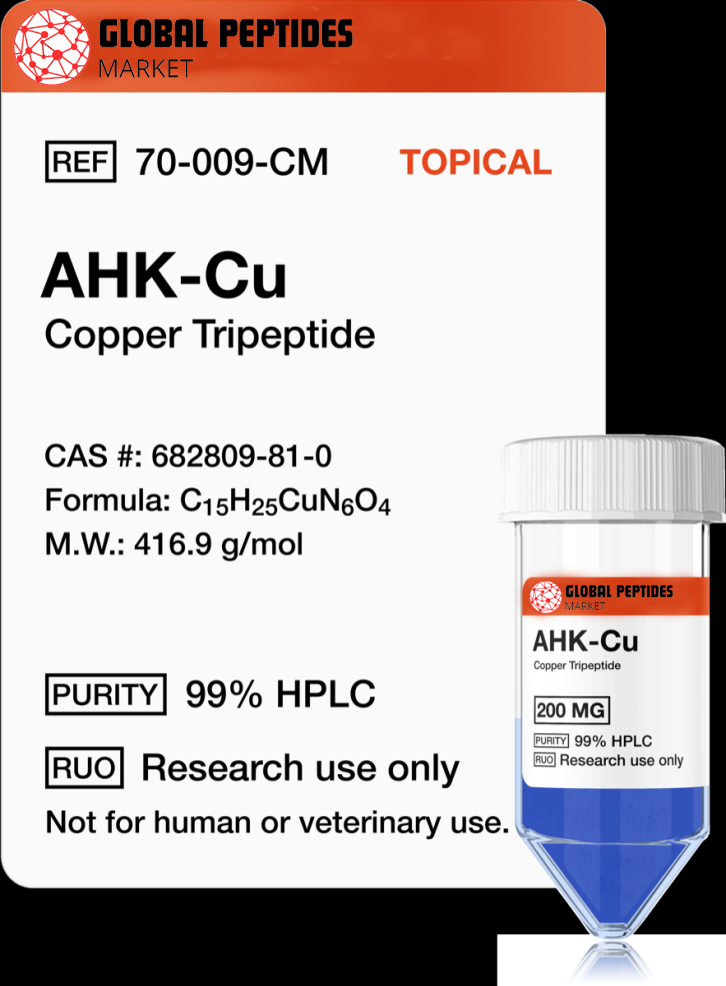
AHK-Cu 200mg (Topical)
$200.00
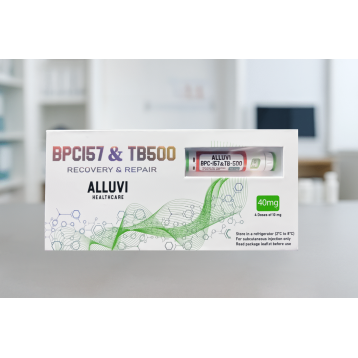
Alluvi – BPC-157 & TB-500 40mg
$130.00
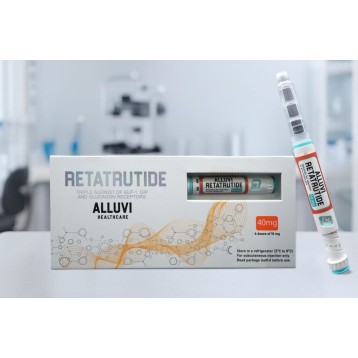
Alluvi – Retatrutide 40mg
$240.00


Reviews
There are no reviews yet.